
No, I’m not teaching etiquette. I don’t work at an all-girls finishing school. I’m talking about what you need to know as a foreign teacher in the Land of Smiles.
Years ago, foreign or farang teachers had to partake in a Thai language, culture and ethics course. Now, it seems, you don’t have to. I think the course was a good idea, although I’ve heard complaints and snickers that it was unnecessary and expensive.
But even for a half-Thai like myself, I’m constantly learning, and readjusting how I interact with my students to meet Thai standards and expectations.
To wai or not to wai?
A while ago, I asked this question to the Thai teachers, and recently I posed this question to my intermediate students. Should you wai back when your students wai to you?
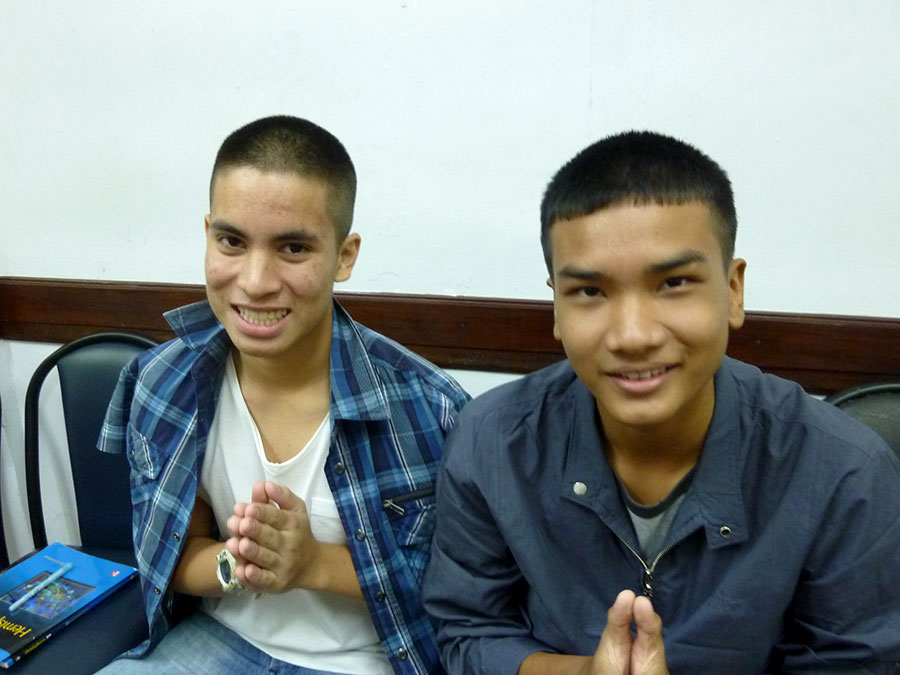
The Thai teachers said I could, but it wasn’t necessary. One class said, don’t do it, but the other class thought it was rude not to return the wai. Usually I don’t, because my hands are full and they are wai-ing me when I’m walking to and from class. Sometimes they wai me when I hand them a worksheet, and I know they are doing that to be polite.
I was told in my TEFL course (which I did in BKK) that we are here to teach our culture too, so we have a bit of an excuse if we are ignorant. However, I don’t want to offend them either, so for me, the compromise is to nod and smile in acknowledgement of the wai. I find in most cases this is acceptable.
Baring tattoos (not fangs).
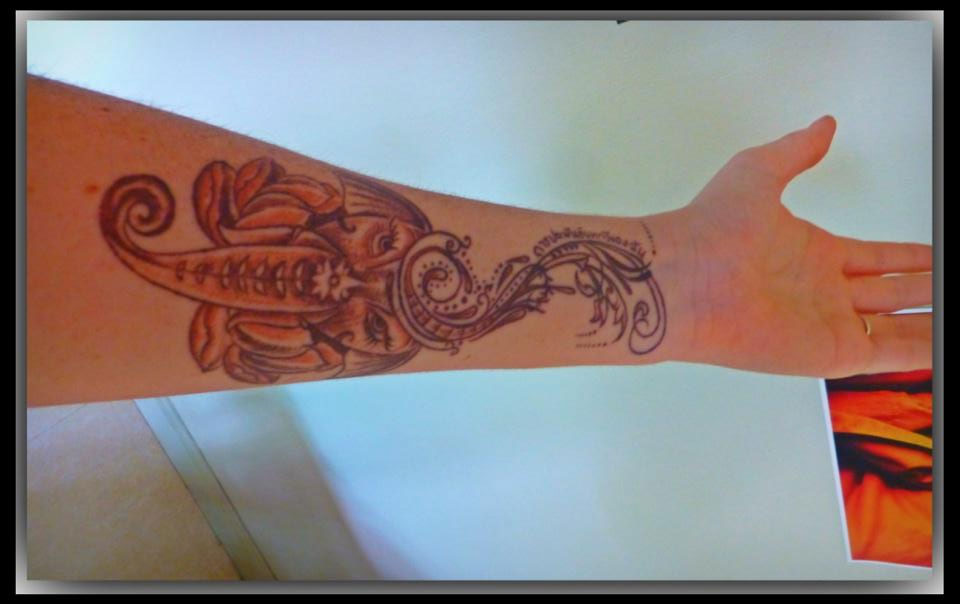
Believe it or not, tattoos are commonplace and the students are not offended if you have one and want to show it off. In other words, it’s up to you, yo. Although, I live in Chiang Mai. It’s probably safe to say that the smaller rural towns will be more conservative about these things, along with body piercings.
Watch your head.
In Thai culture, the head is the most sacred part of the body, and the feet are the lowliest. So you should avoid sitting lower or kneeling down to help your students. I think this is a very Western thing to do. We want to show we are “on their level” so we engage them by doing this, but your head should not dip lower than your students’.

*The exception is when you are comforting a student (their idea, not mine) who is in tears over her broken heart. 555
When I first started working at the lovely language school, I did this often because I had previously worked with 5-7year olds and this is actually recommended practice back in the States, but here I noticed their discomfort when I did.
I started to figure this out though, when we took group pictures at the end of the term. Whenever I crouched low so we could all fit, they said, “No, no, no” and would pull me up. Soon, I realized I needed to stand tall, and they should be the ones to sit on the floor or ‘make themselves small’ for the photo.
Not so happy feet.
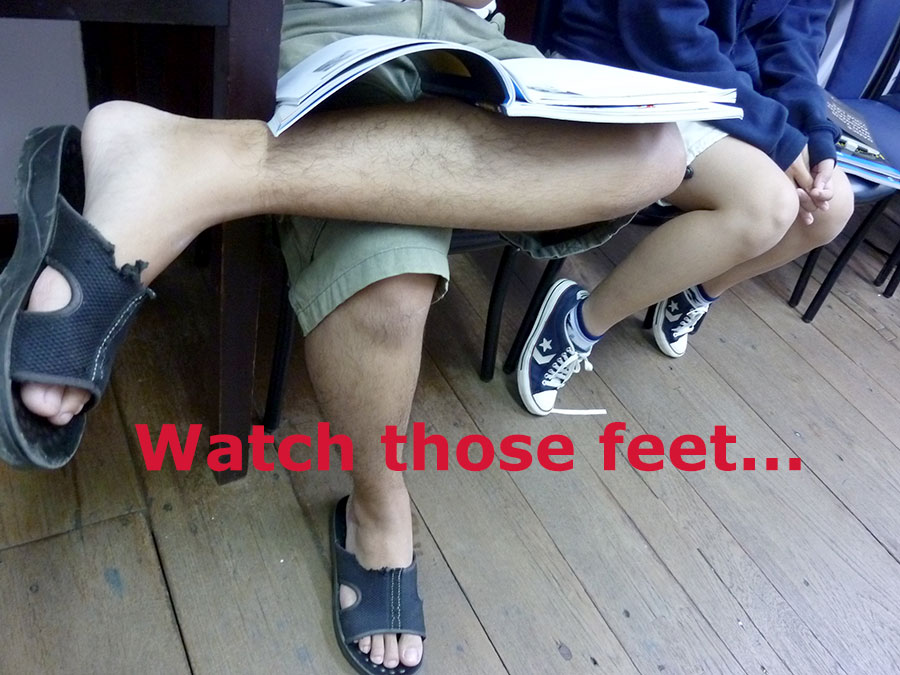
Yeah, so don’t point with your feet. I guess Westerners do this, but this is a ginormous NO NO. If this is a habit of yours, I’d recommend trying to be aware of what your feet are doing. In other words, control your body language and remember that your feet are considered ‘dirty’ in Thailand. When sitting on the floor, keep your feet tucked behind you…it’s damned uncomfortable after a long time, but sitting cross-legged is okay sometimes, just don’t sit with your knees raised and your feet pointing at someone, especially the Buddha. That would be ghastly.
Conquering the cleavage kingdom.
I don’t know why, but bearing your bosom is considered eye-brow raising and – well, slutty. Thais can get away with showing a lot of leg but you should keep your Noam Chomsky’s* under linguistic lock down when teaching (or whenever, really).
Bear in mind, appearances count – a lot. Dress professionally. You won’t regret overdressing. In fact, you’ll regret under-dressing more than anything.
* Noam sounds like the Thai word for milk and breast.(The author is in no way responsible for the damage this imagery may have caused.)
A final note.
After confirming these dos-and-don’ts with my classes, I asked my students if there was anything else I was missing, and was surprised to hear, “don’t swear.” Of course, the temptation to ask, “Who the fuck is swearing?” was great, but instead I just opened my mouth then closed it again.
I’m afraid I’ve had this lesson already, back in my summer camp work days when the director told me I needed to clean up my mouth before the kids arrived. This was after I said an expletive while dealing with the ever temperamental folding machine. Ever since I started working with children, my “language” hasn’t been a problem. Jing, jing.
I also think it’s important to represent your country well. Perhaps that’s old school thinking, but I’m still for manners and etiquette.

Other posts you might like:
- Paul Garrigan’s “There are wonderful teachers post” >>> http://paulgarrigan.com/there-are-some-wonderful-foreign-teachers-in-thailand/
- What I learned from my first year >>> https://lanivcox.wordpress.com/2011/12/08/10-things-i-learned-from-my-first-year-of-teaching-esl/
- What you need to teach >>> https://lanivcox.wordpress.com/2012/04/20/what-you-need-to-teach/
*any ad that appears after this line is WP, not me. sorry*









Comments create conversations. Let’s talk.