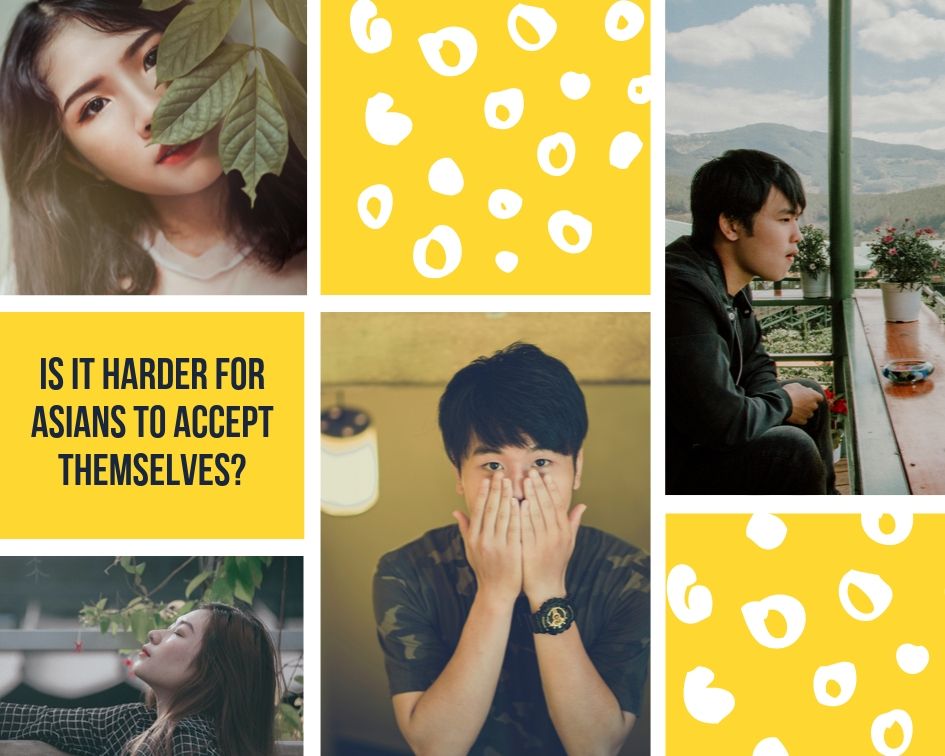
Believe it or not ‘why is it so hard for Asians to love themselves’ was a search term that I found on my blog one morning. I’m usually amused or curious what folks are looking for, and I don’t make it a habit to turn them into blog posts (see exception), but this one piqued my interest.
My search produced two first page results. The first article is by an Asian American woman who lived in many countries during her school years. She discusses the differences between American and Chinese culture, and ultimately, how she’s learned to blend her ‘around the world’ experiences into a strength, not a weakness, as it originally felt.
The second one was by a German Asian male, and his article clocked in at 51 minutes long, so I skimmed. He had a self-loathing attitude, and seemed to resent the fact that he grew up as a minority. I think he’s still struggling with his identity (he’s also young), but is coming to better terms with it.
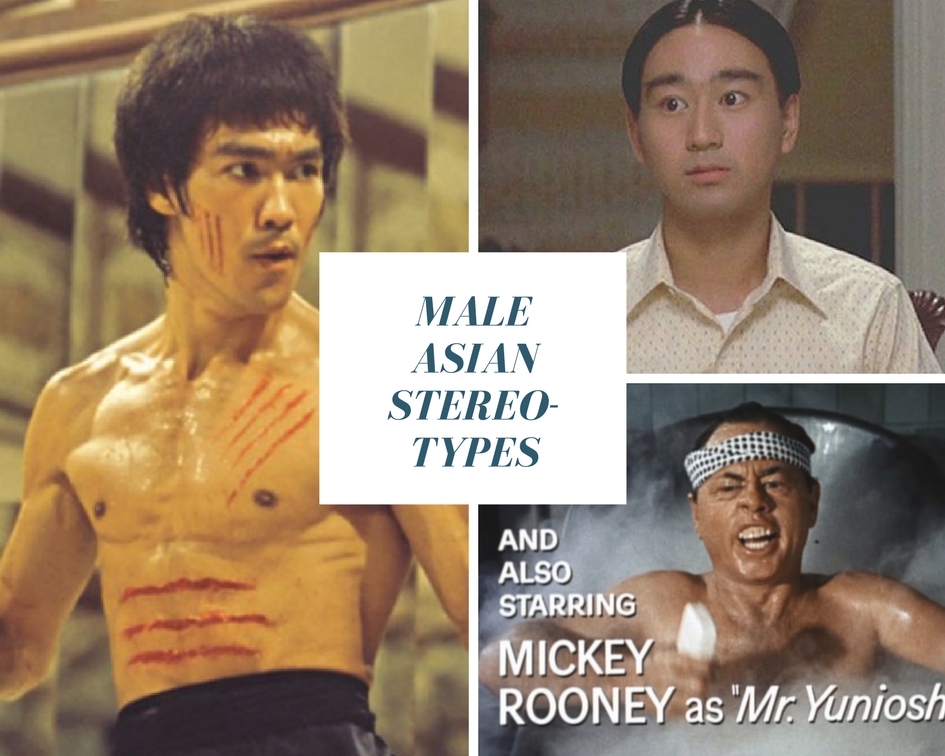
There are a couple of things that jumped out at me. First, I was reminded of when my brother told me that it was easier for Asian women to be accepted into American society rather than males. The Western stereotype is Asian women are attractive, and Asian men are nerdy. Secondly, it sounds like the woman had a broader outlook due to her family’s travels as well as more access to her heritage, which the man did not.
But I didn’t read his article as carefully, so all I can do is make a sweeping statement. (I also can’t speak to what’s it like growing up in Europe, and I imagine Germany’s more of a monoculture as opposed to the States.) The point though was this search got me thinking.
Do Asians (and/or Asian Americans*) have a harder time accepting themselves? Let’s assume there are reasons that they do, and then I’ll attempt to get to the broader question.
** Asians and AAs you could argue shouldn’t be lumped together because of the great cultural distance between them. However, I’d like to argue that most AAs are first or second generation Americans. To quote the wiki, “large-scale immigration did not begin until the mid-19th century”; therefore, I believe that many AAs have a stronger connection to their parents or grandparent’s culture, than say, the majority of other ethnicities in America.
Beauty is a Beast
In an effort to understand why some Asians may have a hard time loving themselves, I reflected on my upbringing by my Thai immigrant mom.
I remember asking her, “Am I beautiful?” and she said, “No, you’re cute.” I was exasperated, hurt, and angry that my own mother didn’t see her child as beautiful. Couldn’t she have lied or something?
She also has made numerous suggestions throughout my life that I undergo plastic surgery for various things. I know, right? But hear me out.
Recently, one of my former students got a nose job. All of her classmates were in ‘oohhs’ and ‘ahhhs’ saying how beautiful she looked. I, on the other hand, was in shock. She’s an nice looking young woman, and it never crossed my eyes that she would do any cosmetic surgery. As I sat with them, with my mouth still agape like an idiot, it occurred to me that I (as a Westerner) was the odd one out.
It’s taken me 10 years of living in my mother’s birth country to understand so much of her. Asians have a much different attitude towards plastic surgery (hello, Korea) than Americans. I knew my mom ‘meant well’ when she made her suggestions, and I’m not like suddenly for it (unless it’s for reconstructive purposes) because I was raised to believe that beauty comes in many forms.
While here, I find myself defending seemingly unattractive characteristics like small eyes or dark skin. Although it is funny that being called short is considered a bit of an insult.
Dare to compare
Asians also have a habit of comparing themselves. Now, you might be like, oh, we all do that, but I would say that Asians can be competitive perfectionists. I grew up forever listening to my mom compare me to other Thai daughters. And perhaps you’ve heard the term Tiger mother? Or Made in China? Knockoffs and copycats are all part of the game.
What’s mental health?
Lately, I’ve noticed Asian Americans talking about metal health issues which are a massive taboo in Asian culture. We’re not fans of perceived weaknesses. We’re great at lifting the rug and sweeping shit under there. We’re excellent sweepers.
Generally speaking, Asians aren’t into talking about their feelings. When we returned home from school, my mom never asked us, “How was your day?” or “How was school?” We never had cozy hugging moments, or were read bedtime stories, but we were brought up on plenty of cautionary ‘don’t you end up like so-and-so or I’ll kill you’ tales.
It’s not in the culture, really. Americans like to ask, “How are you?” Thais like to ask, “Have you eaten yet or not?” or “Where are you going?”
Quick conclusion: A culture with the strong tendency to be obsessed with appearances + compare + don’t talk about feelings (+ social media, and/or you are different) = potential self-acceptance issues.
Caveat: The Lucy Liu phenomenon
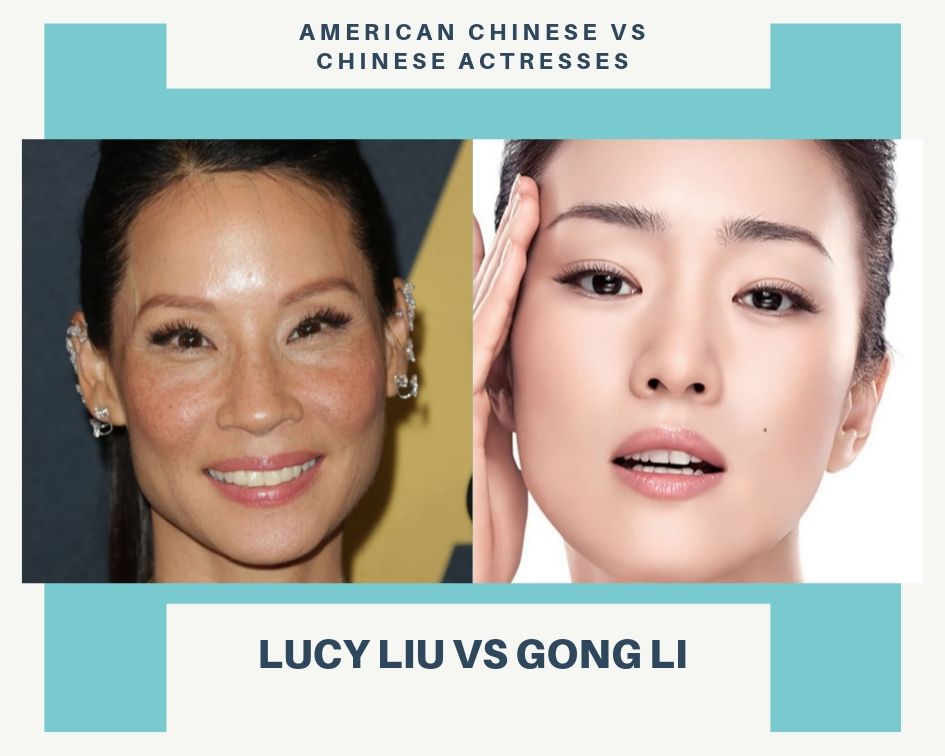
In China, American Asian movie star Lucy Liu is not considered a desirable beauty. She’s got freckles, her eyes are a bit too slanted, but to Americans and many others, she’s stunning. The Chinese have a different idea of beauty that I would argue is more conventional.
Westerners typically look for the qualities that make a person standout (individual), like Cindy Crawford’s mole, even though she was initially encouraged to get rid of it. However, being different in Asia is – well, not being normal.
There’s also a Thai supermodel that has enjoyed international success, but in her home country she’s considered too dark skinned, too outside typical beauty standards to receive any attention.

Who’s standard of beauty are we going to go by? Does it matter?
Caveat: We all can struggle with loving ourselves
Something that I think gets overlooked in minority cultures reflecting on their differentness is the assumption that just because folks appear alike on the outside that they feel the same on the inside.
In other words, I can’t walk into a room full of Asians and expect everyone there to feel a sense of belonging or acceptance. I’m sure on any given day there is someone in the crowd (no matter how much they blend in) who feels alone, ugly, or lost .
When I was an Asian American in the US of A, minority or not, race wasn’t necessarily a deciding factor on whether or not I felt like I belonged. Even in Thailand, I don’t get a sense of ‘these are my people’. Actually, I feel more American than ever.
While loving myself is no longer the struggle it was when I was younger, I still try to remember to have compassion towards everyone in the room because I know everyone struggles with self-doubt, fear of rejection, and other emotions that drag us down.
What do you think?









Comments create conversations. Let’s talk.