Last week, my Public Speaking and Debate students gave their first formal speeches. As always, I was intrigued by what each new set of students will talk about and how they will deliver their speeches. One student in particular gave a speech called, “How to love yourself without losing weight” that brought a tickle of tears behind my eyes.
It wasn’t a nine point list of things you could do to love yourself, but instead she told the story of how she gained weight during her primary school years and how she started to see herself as ugly and chubby. She mentioned how she belongs to the ‘selfie generation’ and her decision to take photos of herself only from the waist up throughout high school.
There was a turning point in which she made the choice to stop beating herself up for her appearance, but what struck me was how personal and vulnerable her speech was (this class is only a few weeks in), and the fact that she’s quite adorable-looking and not overweight at all. I felt myself relating to tale of looking back at old pictures and realizing there was absolutely nothing wrong with me, but boy did I think there was.
Ironically, at the beginning of class, when we were standing in a circle and I was leading them in warm-up exercises, another student casually mentioned how she felt fat. I turned my head towards her and said, “No, you are not. Not even close.”
“I exercise so hard every day, but I still look like this.”
Incredulously, I took her words in, as well as the slim dark leggings she was wearing.
“You’re NOT fat. You’re fine.”
This, unfortunately, wasn’t the first (or last, I’m sure) time a teenager or young adult in my class has declared that she’s bigger than she really is. I always insist that they’re not and I try to nip it in the lotus bud as quickly as possible without making a grand deal about it. But to be clear, no one who’s morbidly obese or who is in medical danger has said, “I’m fat” to me.
Now, don’t think for one minute that Asians are not getting larger like Americans because like acne, teens around the world are experiencing the phenomena of a more sedentary lifestyle along with tasty junk food and sugary drinks. For the ‘selfie generation’ I do wonder what’s in store for a future life without the filters.
But I know how my students feel because I was once a teenager and even now, I sometimes battle with it, even though I know that I’m considered lucky to have never gained a lot of weight, and I’ve been told all my life that I’m thin.
Then on the following day or two, as I was scrolling through my Instagram feed, I saw a post from a fellow blogger friend on turning 45. She confessed it was challenging to see herself age, to see the wrinkles and to understand that her eye sight and body wasn’t what it used to be. However, she was going to try to be more mindful and enjoy life’s little moments. But since she’s just six months older than me, I found her words thought-provoking.
She reminds me of another friend who I met in Thailand, teaching at the same school. She’s striking, tall and I’m fairly certain she’s been told that she’s beautiful from a young age, and has she ever modeled? I remember when she started freaking out because she was turning 30. I thought she was overreacting, but then the reason why I brought the two women together in my mind is because they are both very attractive.
My thoughts next turned to celebrities and how I find myself scrutinizing to see if they’ve “had work done” or when I see friends from high school on Facebook, who’s aging well and not-so-well. Following that, I started to ponder America’s obsession with youth and appearances. So, it’s really no wonder we women find ourselves staring at the mirror again and again throughout our years.
In my 20s, I felt like I didn’t appreciate myself as much as I should have. I was taking on the task of being an adult and that was serious business. When I was in my 30s, I finally relaxed about the way I looked. And those can be great years of looking youthful, but also having the brains behind it.
When I turned 40, I minded, I mean it is a big number, one that I used to associate with ‘mom’s’, but I told myself it’s just a number, it’s a privilege and honestly, I didn’t feel forty. I learned how much our perception of age changes with the years. And it’s with great hilarity that I try to convince my students that 41, 42, 43, or 44 is not old, and to borrow my brother’s words, “simply half way there”.
But I have to admit, nowadays, I’m glad I was never told I was beautiful or gorgeous. I think for the “Elizabeth Taylor’s of the world”, getting greyer is tougher because society often reminded you of how wonderful you looked. We can’t help, but form an attachment to our appearance. Watching yourself change with each passing year is something that I don’t think anyone can quite prepare you for though. Aging happens to other people.
You know, I never understood botox until I saw the lines around my own eyes. It’s hard not to cringe. Yet, I’m determined to stay natural and accept the years on my face and body.
Asia in many ways is absolutely horrific when it comes to judging by appearances which is why I was concerned that I’d never be able to teach English looking Asian. But the difference here is at least the older generation gains respect. I feel like in the States, older people are considered ‘in the way’ or ‘slow drivers’. When my eldest student gave his speech he started off with a traditional greeting of putting his hands together and all the students greeted him back in return without thinking, just muscle memory, pure culture.
Then again, maybe Asia is simply a good example of the old and new ways clashing. Braces on your teeth are a sign of privilege and wealth; SUVs are status markers and traveling outside the country, a big benchmark of success.
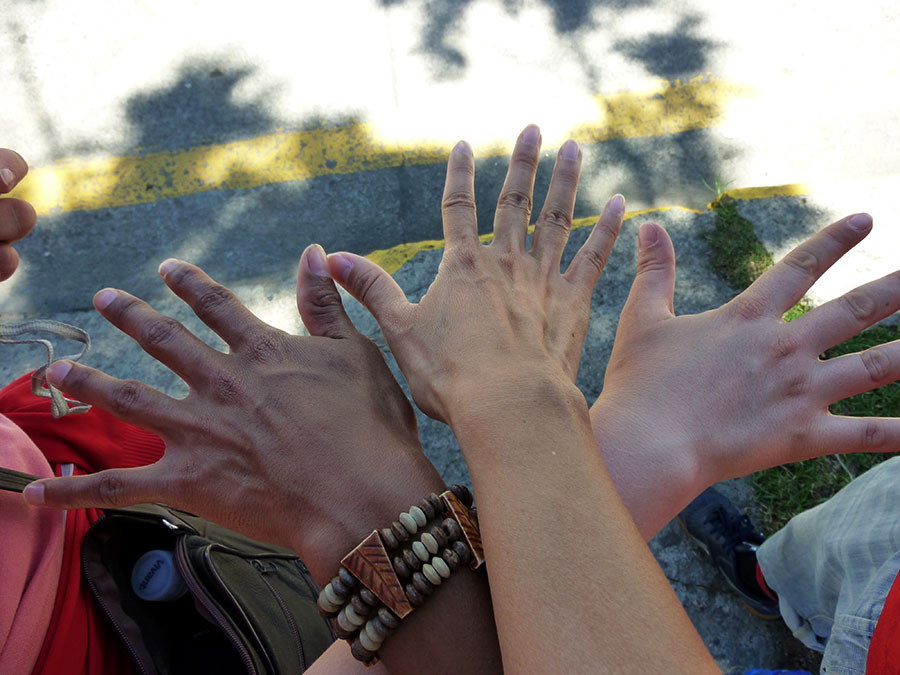
The world seems upside down, but if we understand history, it always feels this way and yet, I can’t help but wonder why we keep recycling old negative messages: profits over people, and appearances over actions.
Isn’t it funny how when you first meet someone you might think they are attractive or not so attractive, but then you get to know them and how much their looks can change? As an expat I meet people from all over the world, all different ages and as a teacher, my students surprisingly vary a good deal, too. I can say with certainty that everyone has an opportunity to raise your eyebrows and furrow them as well.
But the point is this: you will age, but your attractiveness lies in how you treat other people, animals, Mother Earth and yourself. It’s in what you say, and how you say it. It’s in the stressful situations you find yourself in, how do you handle it? It’s in the micro-moments. It’s in what you expect of others, the language you use, and, of course, your deeds.
So I think the reason why women (and men) find it difficult to accept themselves is because the world doesn’t seem interested in training us to be good people. They want us to behave, and living in fear is a powerful way to control a population. But if we could remember that we are beyond our bodies, I think we’d rediscover words like ‘soul’ and ‘spirit’ which don’t necessarily have to be heavily-laden religious terminologies so much as an intuitive expression of what we already sense and know to be true. I am more than the physical, a husk or empty shell. I’m a living breathing person, damn it, and there’s more to me than this.
Do you struggle with your appearance?







Comments create conversations. Let’s talk.