It has become a necessity for me to write down my early memories. If I neglect to do so for a single day, unpleasant physical symptoms immediately follow. As soon as I set to work they vanish and my head feels perfectly clear…. Something within me has been touched. A gradient has formed, and I must write. -Carl Jung, from Memories, Dreams, and Reflections
The seemingly contradictory thing about memoir is when you write about yourself, you’re writing about experiences that other people can relate to as well. And even if some people don’t have similar life stories, their minds take in yours to contemplate, reject, put aside or absorb. I may not be a baseball player, but I can understand making a comeback. I’m not a mother, but I can feel sympathy for the trials and tribulations of raising a child. By writing about you, you’re adding your story to the collective consciousness.
This paradox can also be seen in travel which is considered the Holy Grail of self-improvement, adventure and growth. When you travel, you take in new sights, sounds and smells by stepping outside of your comfort zone, your neighborhood bubble, native country, language and culture. You’re challenged by your short-comings, preconceived ideas of how things are done or how to behave. If you travel to a country poorer or richer than yours, you can see how the other half lives. In this way, you can broaden your inner horizons when you seek outward experiences.
The same, of course, can be said about charity or community work, when you give to others, you give to yourself, too. Then there’s the meditative benefits (stillness) that folks experience when running or doing another forms of exercise (movement). How we behave in society appears individualistic and independent of others, like when we simply pick up trash or stop at a red light, but it’s clear that we all benefit from abiding by rules and our agreed social contracts.

There’s a false idea that writing memoir is the ultimate in navel-gazing. That people who write true stories, from memory, letters or notes, who write about themselves are vain, self-absorbed, and lack the talent to write about anything else. The problem is, just like any other genre, there are well-written stories and not so great ones. And the fact that everyone appears to want to write one, doesn’t help in the belief that writing memoir is actually a worthy undertaking.
We know that there are many benefits to writing:
• learning to express yourself clearly
• handling hard times
• forming a relationship with gratitude
• jotting down ideas
• gaining insights into who you are, your needs and wants
There are also great creative benefits, as Julia Cameron wrote about in her book, The Artist’s Way, specifically, her ‘morning pages’, which consists of writing non-stop, long-hand on three pages first thing in the morning.
Many successful people write as well, whether it be gratitude lists, or to-do lists, what-to-do-tomorrow lists, they write for themselves so they can be more productive. But you don’t necessarily have to write a lot. I suppose it depends on what your goals are, but if it’s to become more self-aware here are some more tips.
Cheryl Strayed asks the question (from one of my favorite podcast interviews), “Who was your darkest teacher?” I can’t imagine writing that one without gaining a clearer idea of the lessons I’ve learned. Even if you’re simply emoting and getting thoughts out on paper, you’re still getting them out of your head, which isn’t the best place to let them rot and fester like forgotten leftovers in the dark recesses of the fridge. Then, if you decided to share your answer, I’m willing to wager there are people out there who can not only relate, but who want to relate to your experience.

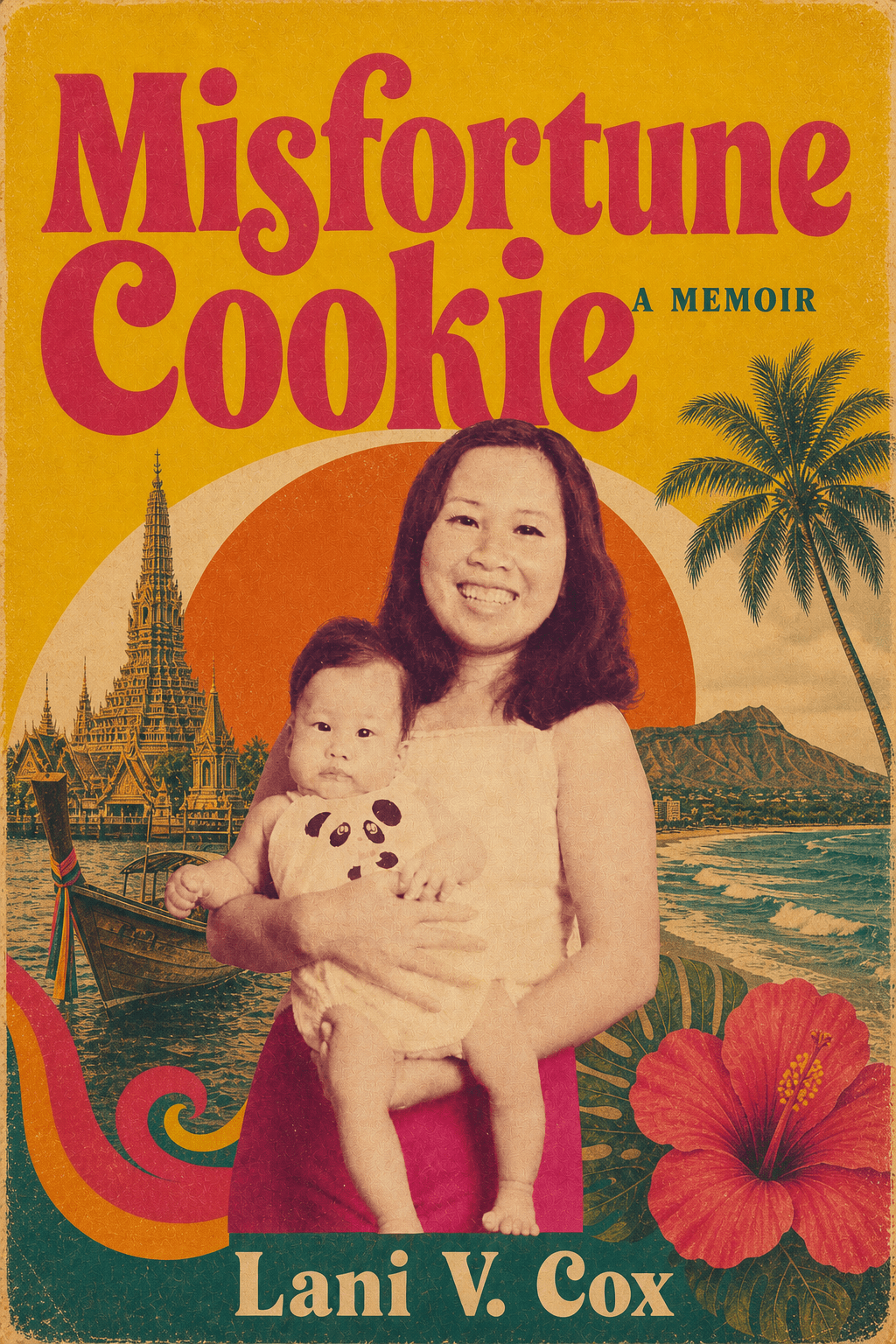
I’ll be honest. I cringe a bit when I tell people I’ve written a memoir, and I’m working on another one. I fear what they are thinking. Some are perfectly nice and act interested, but that doesn’t make me wonder if they’re thinking all the negative things that people tend to think when they hear or see that word. Part of the purpose of writing this post is to say, “Hey, memoir writing’s valuable! I’m not conceited! Try it, if you don’t believe me!”
What’s interesting is how we seperate non-fiction and fiction storytelling, specifically looking down on memoir, and yet we have quotes we all know like, “truth is stranger than fiction” or “based on a true story”. Many fictional stories are inspired by real events, on a conglomeration of people known, and factual towns, schools and offices. My own attempt at playwriting in college was a thinly-veiled story about one of the aspects of my childhood. (When my professor asked me if the story was about me, I said it wasn’t. I became spooked and too terrified to continue with it for fear of folks knowing the story was about me.)
One of the reasons why I was attracted to Waldorf education, and later became a Waldorf teacher, was because of the curriculum’s emphasis on stories. Each grade centers on a theme, for example, in the second grade, the focus is on the stories of fables and saints, and in the first grade, its fairy tales from around the world.
We didn’t read the stories from a book, but had to memorize them. In fact, as part of the interview process for the teaching job I eventually got, I had to tell a story to a kindergarten class. But the reason I got the job was because I decided to tell not a story from Hans Christian Anderson or Brothers’ Grimm, but a story about a Chinese boy who had saved his village from a (seemingly evil) dragon. Interestingly, I was hired for being different and that would end up being the reason I was fired, as well.
In any case, this was where I excelled – oral storytelling. This was where I felt nourished. I loved learning about the meaning behind these old stories that many see as just some frivolous form of entertainment. I loved discovering a common thread between fairy tales all over the world (for instance, there are 345 varieties of the Cinderella story!) I liked finding stories that challenged the way I originally thought of fairy tales and finding female leads like Gerda in The Snow Queen.
It seemed inevitable then that I’d discover Joseph Campbell’s work (best known for The Hero With a Thousand Faces) on myths, legends and archetypes. Through Joseph Campbell’s work and analysis on what makes a hero’s story, I discovered not only a common framework in which stories are built, but that everyone’s on their own hero’s journey. In other words, everyone plays the leading role in their own lives.
Yes, we know this, but we forget it. I know I succumb to a bunch of the clichés. I get lost in the mundane. I miss the forest for the trees. I get bogged down by the little stuff. I sweat the little stuff. I let the little stuff get in the way of the big stuff.
“We but mirror the world. All the tendencies present in the outer world are to be found in the world of our body. If we could change ourselves, the tendencies in the world would also change. As a man changes his own nature, so does the attitude of the world change towards him. This is the divine mystery supreme. A wonderful thing it is and the source of our happiness. We need not wait to see what others do.” – Mahatma Gandhi
There’s value in knowing yourself. There’s power in writing about you. And there’s magic in stories.
When I was a child, I listened to my mom talk about my father because that’s all I had, memories. And then I would ask her to tell me those stories again. When I started to pour myself out on paper, I didn’t understand all the benefits, but I kept doing it because it helped me. Then later, as I got older, I recognized that writing + stories + me equaled something meaningful.
The best stories I think offer an open window, an invitation into a culture, sub-culture or different world other than my own. It has universal themes like love and loss that span borders or belief systems. I’m lost and found at the same time.
I learned about what it was like to grow up Jewish in Mississippi by reading my friend Edward’s book, The Peddler’s Grandson. We met in Ecuador when we were both teachers there and I shared my interest in writing a memoir. It was a quick and fascinating read of a different perspective of life down South and during the Civil Right’s Movement.
Another book that I dipped in and out of because they are short stories was Written by Herself: Volume I: Autobiographies of American Women: An Anthology. I read the stories of American black women, and the stories of pioneering female scientists and doctors. That book helped to put my own problems into perspective by giving me an opportunity to get educated and absorbed in the early struggles of American women.
The Glass Castle simply took my breath away. Jeannette’s story is unique, timeless and shocking because she tells the story of her upbringing among neglectful yet loving parents, and a life of forced poverty. I love the complexity and I’m not surprised Hollywood has attempted to make this into a movie. I fear they won’t be able to capture the beauty of the book.
But here’s the thing, I believe stories can help heal the world. Stories make the world a brighter place. Our common thread is told and retold in stories. True stories have the power to bring people together, and ironically, when we write about ourselves, we sort ourselves out and we become better citizens, and better citizens contribute to a healthier society. It’s not selfishness to try to figure yourself out, it’s liberating, necessary and it’s the kind of inner work that reaps outer rewards.
Do you write about your own life?







Comments create conversations. Let’s talk.