
You mean they’re not? (*hit the gong*) Well, according to Vijay Pendakur’s Open Letter to Asian American parents, no, they are not. Really?
First of all, I’m all for parents teaching their children to be proud of their race/ethnicity/culture/etc. Now, whether or not the child embraces their culture and parents’ teachings is entirely up to the classically debated nature vs. nurture. Are children born with a ready-set-go personality, or are they teachable, mold-able, and workable?
However, I think it bears mentioning that part of the university/college and leaving-the-nest-experience is figuring out who you are – and dare I say it, shedding or challenging your parents’ beliefs and ideals.
Vijay’s question to Asian American parents, “Why aren’t you teaching your children to identify as Asian Americans?” is, well, how can I say this, an oversimplification hot-peppered with what seems to be many assumptions.
What about Asian children adopted by Caucasian or non-Asian families? These parents might try extra hard, or feel they cannot “teach their child to be Asian” at all.
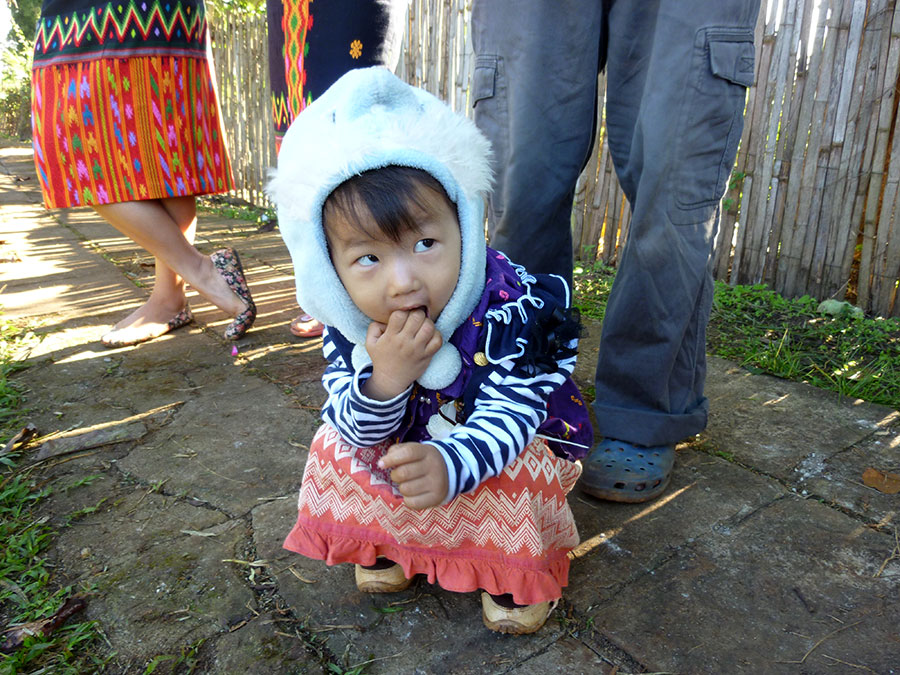 Or what about mixed raced children? This is another challenge, and highly dependent on how the child looks. My brother has 3 children of mixed ethnicity, and one of them looks more Asian than the other two. Will he be treated differently? Will he identify with his Chinese/Thai heritage more?
And what are the parents really doing? Vijay bases his conclusions that the American Asian college students crossing his desk are NOT being educated on their background and culture. That’s why he wrote his exasperated blog post in the first place. But how many children simply don’t listen to their parents? Are not ready to hear or understand what is being taught to them? Or just roll their eyes?
There is also a BIG assumption that the values and beliefs being handed down from generation to generation are positive or even socially acceptable. As a general rule, Asian culture is patriarchal, and there’s a long history of men overpowering and bullying women. Now, you could make an argument that other cultures do this as well, but I’m going to stay with what I know. And I know from my own experience as an Asian American woman living in Asia, with parents and grandparents who were born in Asia, that the submissive overtaken female is a commonplace ideal, that is advertised and openly perpetuated.
Now, I know that when we think of our dear parents teaching us about our culture, background and ethnicity, that we don’t think about the negative side. Culture is positive, right? But I have to move in the negative direction, because I think it’s being overlooked.
My mother was born and raised in a small town in Northern Thailand. Her family didn’t have a house. They were homeless, traveling from job to job, or in their case, farm to farm. They were so poor that they paid for food that they ate the day before, the day after. My mom stopped going to school around 11 or 12 years old because her family couldn’t afford to send her.
My mom didn’t teach us Thai, but she taught my younger brother and I things like, “If somebody hits you, you hit back!” This was in response to when we asked her what should be do when a kid hits us, because there was a lot of fighting going on in schools when we were growing up. I understand, but many parents would be horrified by this point of view.
But my favorite is, “We’re Asian, we don’t do like that.” She constantly put down other races or ethnic groups. I was forever told how white people did this and do that (like divorce! and cheat on their wives!), and we don’t do like that. I also knew that I could never date a black man, or she’d kill me.
But my brother and I laughed, and told her she couldn’t say things like that. We were American-educated and knew that what she was espousing, while well-meaning, was essentially racist. I’d like to think education goes both ways, not just from parent to child, but child to parent too.
When I was a kindergartner, I remembered crying all the way home. When my mom asked, “What’s wrong?” and I told her a kid called me, “Chop suey” – Do you know she did? She laughed.

Look, I love my mom. She’s the best because, despite any flaws/shortcomings, I know she loves us very much. Childhood was challenging, to put it gently, but I know everyone did what they thought was right at the time. And now my mom can be proud because both my brother and I graduated from college and university.
Yet the cautionary tale is this: you can teach your kids to be Asian American and you can also teach them to think Asians are superior and better than everyone else – to be racist. Besides the what’s wrong with that-hahahha mentality, this isn’t about going too far or extremes, it’s how my mother truly feels.
I certainly wasn’t proud of being Thai or Chinese while growing up. When we went to Thailand when I was a teenager, I wasn’t proud of the poverty, the filth, and the cultural differences. If anything, I was proud of being Chinese because I took after my father, who I missed. That doesn’t really make me Chinese though, right?
Parents want their children to be safe and be accepted. I think that is why my mom didn’t teach us Thai. She knew what it was like to NOT be accepted and feel isolated and lonely when she moved to the US. I’m not saying we can’t be proud of our culture or “race” and be accepted, but sometimes by trying to be accepted, we find out what’s important and who we really are.
As a teacher, I want my students to feel confident and proud of who they are. I feel if you want your children, our children, to be proud of their ethnicity and culture, expose them to all kinds of cultures and people. I know the racism I experienced once I moved from Hawaii to the Mainland had to do with other people’s lack of exposure, and of interactions with different kinds of folks.
But from my experience, my identity is in part, who you think I am, and who I believe I am.








Comments create conversations. Let’s talk.