This month let’s give thanks to our reading brain!
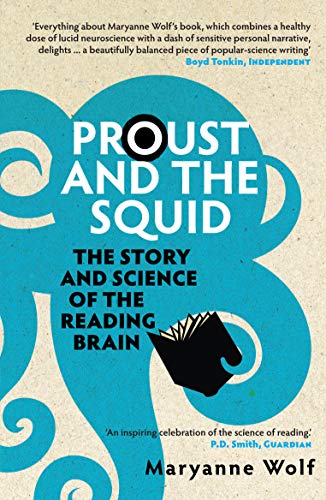
I needed a nonfiction fix, so I perused my Kindle library and found Proust and the Squid: The Story and Science of the Reading Brain by Maryann Wolf.
“WE WERE NEVER BORN TO READ. Human beings invented reading only a few thousand years ago. And with this invention, we rearranged the very organization of our brain, which in turn expanded the ways we were able to think, which altered the intellectual evolution of our species.”― Maryanne Wolf
I never really thought about our reading brain before, just took it for granted. And unlike some folks, I have no recollection of even learning to read.
In fact, I only recently discovered that my mom sent me to an after school reading program when I was a child. But since my dad died during a pivotal moment in my primary school education (I was five) and that my mom learned basic English in her 20s, I’m not surprised this happened. I just love her even more for taking care of me because I know it was an incredibly stressful time for her.
And while I was never read a bedtime story, I grew up in a household that enjoyed reading. Mom often poured over her Thai newspapers and celebrity magazines. And her boyfriend, the one that raised my brother and I, liked to read fat paperbacks. As I got older, he shared them with me. Even the books left behind by my father showed what an avid reader he was.
Proust and the Squid was heavy reading, filled with lots of jargon and diagrams about the brain, yet I found myself devouring it. As an educator, it was hard not to think about my students, the school, what we were doing and not doing to meet the children’s needs. Wolf takes us through a historical tour of how our brains developed to read (and write), but she also focuses on dyslexia (both professionally and personally, her son), and the future of our reading brain.
As you can imagine, with devices and the internet, our brains are changing. So, she asks, what does the reading brain look like when it’s no longer is asked to conjure up images from stories, when those images are given to you via the internet. What will happen when we no longer have “the gift of time” to digest and ruminate over words because in our age everything flashes before us at the speed of light?
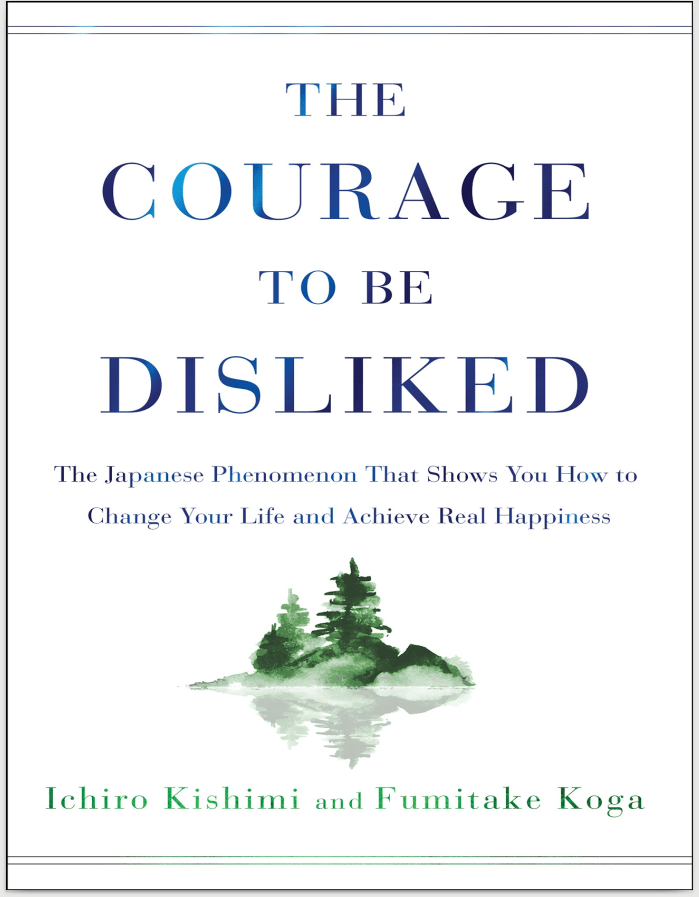
I’m still reading this one. When I have time at work, I pick at it, but this is not a very good way to read a book like this since I’m interrupted frequently during my lunch break.
Essentially though, the story unfolds through a conversation between a wise old man and a young whipper snapper who believes the world is a competitive and depressing place. The sage is an Adlerian philosopher. [Alfred Alder was considered one of the three giants of 19th century psychology alongside Freud and Jung.]
“Your unhappiness cannot be blamed on your past or your environment. And it isn’t that you lack competence. You just lack courage. One might say you are lacking in the courage to be happy.”
― Ichiro Kishimi
This book is definitely not for everyone. I think folks who like self-improvement and/or are interested in psychology and relationships will find this interesting. If you’re looking for riveting dialogue or come at it with strong preconceived ideas, you’ll be annoyed or frustrated. So far, I’m looking forward to reading it during my time off in April.
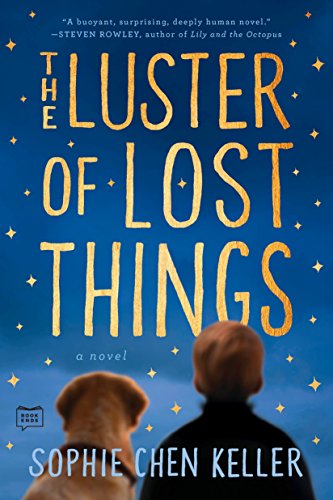
I wanted to like this book. My husband read it and told me out of all the novels he’s read lately, this one has stuck with him. So, I thought this would be a nice segue back into fiction, but it didn’t hold my interest.
We discussed this, and decided The Luster of Lost Things is plot-driven rather than character-driven. The protagonist is meant to be invisible (he has a speech problem), and the story is considered magical realism, but I think I needed it to be one or the other, or feel a stronger connection to the characters.
Sophie Chen Keller writes beautifully. The story is sweet, takes place in a bakery (what’s not to love!), is whimsical and uplifting, but it wasn’t for me. Have you read something similar? Something that you should like, but don’t?
How was your March? What are you reading?







 Life, the Universe, and Lani
Leave a reply to naomisilverart Cancel reply