
There’s a Thai word “greng jai” that has always annoyed me. It’s basically used to describe a person who doesn’t want to be an inconvenience to anyone. They don’t want to be a bother, and it’s supposed to be a positive trait. We have this same idea, too, in American culture, but I feel it does more harm than good.
How many times have we considered asking for help, but that inner voice says, “Oh, I don’t want not bother her”? When we need directions, we drive in circles or we get flustered before asking a stranger, if we bother to do so at all.
There’s a joke that illustrates the psychology of this perfectly:
A man’s truck broke down by the side of the road. After he got out of his truck, he realized that he had a flat tire. The good news was he had a spare tire, but the bad news was he needed a jack.
He saw a farmhouse in the distance, and decided he had no choice but to ask if someone in the house had one, but he really didn’t want to do it.
Grudgingly, he walked towards the house, cursing to himself, imagining the man who answers the door telling him, “No, we don’t have one”, “Who are you? Go away”, “It’s gonna cost you”; he could see on the homeowner’s face a look of annoyance and irritation.
Finally, he got to the house and knocked. A woman opened the door.
He yelled.
“To hell with you, and your jack!”
Then he stomped off.
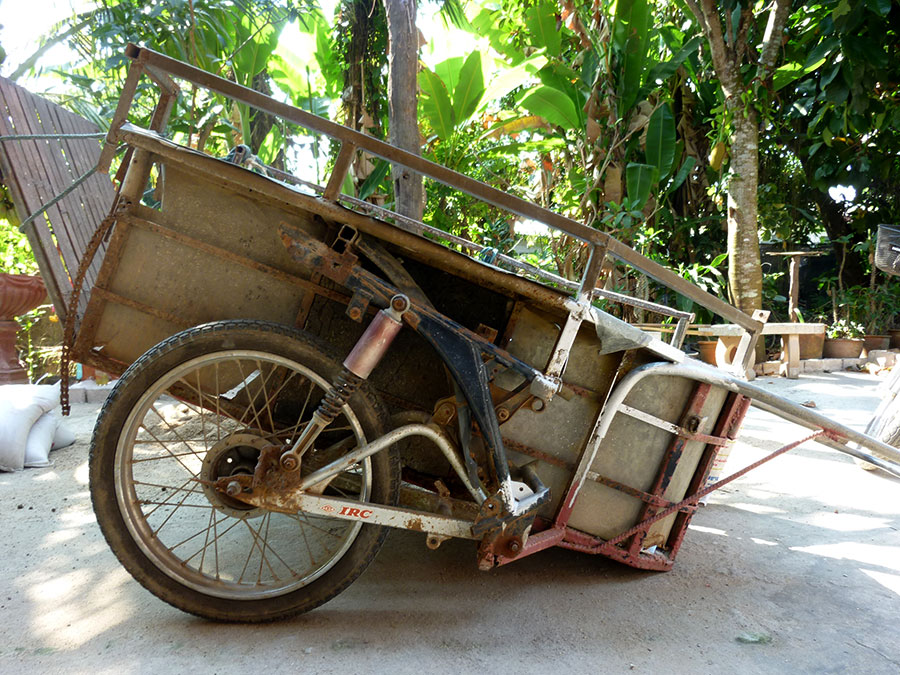
Greng jai is supposed to mean “considerate of others”, but by being so-called considerate, we’re not being considerate of ourselves.
As an expat in Thailand, I find the concept of greng jai akin to locking myself in jail. Sometimes I have to ask for help and sometimes I have to inconvenience others. I’ll feel guilty and I won’t want to ask for help. If I were back home I might have been able to figure it out on my own.
Grown educated men and women suddenly become as helpless as babies when trying to set up roots in another country. My boyfriend told me stories of expat teachers with their Chinese students helping them with simple tasks like purchasing a fan or phone. And even if you do know the language, there are cultural nuances, location specific ways of doing things that you probably won’t even be aware of.
When we returned to Chiang Mai a few months ago, we needed a very important letter sent to us, but we didn’t have a permanent place to live yet, so we asked a friend if we could have the mail sent to her because she runs an apartment building. This meant we needed to get her address in English, contact phone numbers, and someone had to be there who could sign for it.
Now this is something that some of us would hesitate asking a friend to do (depending on the friend, I suppose), and we might even think of other options first. Sometimes we go to great lengths not to bother people and when a friend or family member finds out, they inevitably say, “Why didn’t you just ask us? We would have helped you.”
“No, no, I didn’t want to bother you.”
“It wouldn’t have been a bother at all.”
When I’m thrashing myself over the latest thing I need help with, I’m gently reminded, if the situation was reversed, would I do it? Would I help me if I was you? And very often the answer is YES.
Our Thai friend who helped us receive the important letter did us a great favor, and saved us a huge hassle of figuring out other options in a country where mail is not so reliable. The thing that greng jai fails to consider is that sometimes people don’t mind helping. It’s not always an inconvenience. It feels good.
Then she did us another kind deed of finding us a temporary place to live because she knew we were looking. And we were helping her out too because the person who was originally going to stay at that free apartment went someplace else.
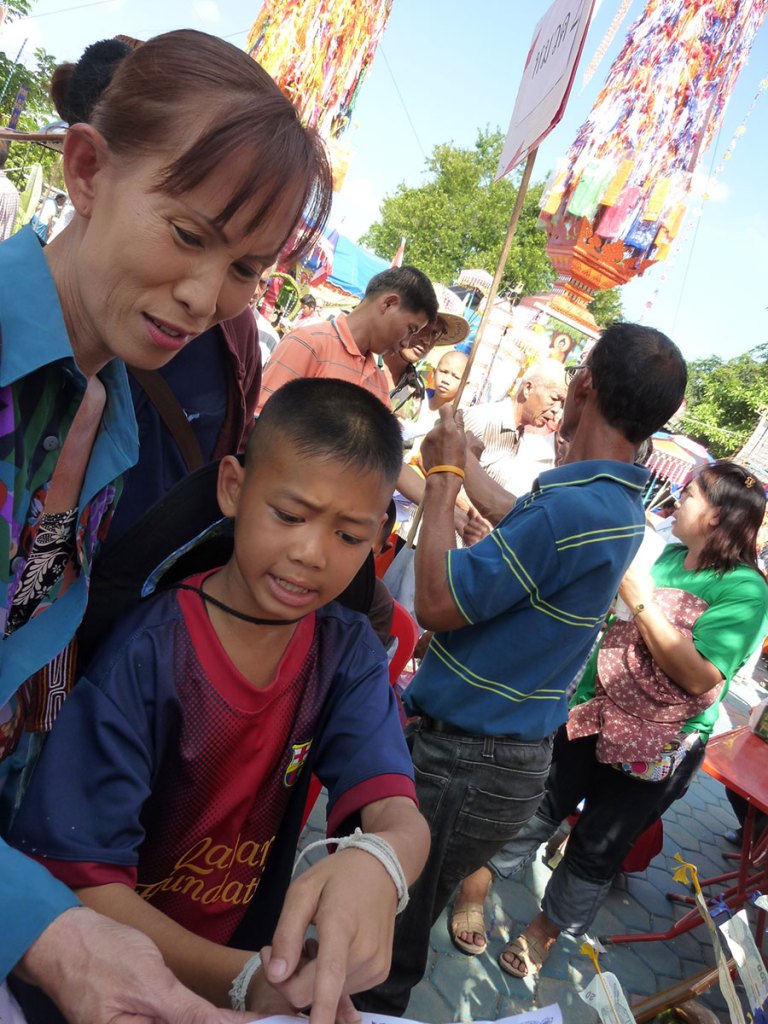
When I was back in Hawaii arguing with my mother, because she was unhappy with my decision to return to Thailand, she said, “Don’t ask Thai people for help.”
I was stunned as if I had been slapped. Not only was she shutting me out, but she was letting me know that the good people of Thailand should not be counted on either.
Now, I would argue that we need community more than ever. We live in strange little worlds where we stare at glowing computer monitors and smart phones. I’m curious how technology is effecting our relationships. It’s sad to see some of my students showing signs of phone addiction.
If I had it my way, I’d never bother anyone, but that’s not the way our world is set up. It’s moving in that direction, but I don’t know if that’s necessarily a good thing anymore. For example, you could diagnose your aliment on WebMD, order some medicine online, and never see a human being during the entire process. This is progress, right?
Sometimes we need help. I hate that this idea of “don’t be a bother to other people” is so pervasive in our cultures when at times reaching out is better than reaching in. I can’t help but think about the popularity of suicide these days with the likes of 13 Reasons Why and celeb suicides. I believe concepts like greng jai can prevent people from getting help.
Americans pride themselves on independence, and I understand why I’m not supposed to ask my neighbor to help me move some boxes, or why I shouldn’t ask a friend to take me to the airport. Perhaps it’s seen as a sign of weakness or maybe we’re scared.
During one of my darkest periods in my teaching career, I wasn’t getting the support I needed. I felt quite isolated and stopped reaching out. There are definitely times in our lives when we made the decision to not pick up the phone or write that email when doing so would have done us a world of good. When I was in Hawaii (see mom above), I decided to call my friends. I connected with buddies I hadn’t talked to in a while, who know me, who love me, and they were encouraging and wonderful during a time that was painful for me.
I say quit playing the martyr role and ask for help if you need it. Ask the stranger in the grocery parking lot if you’re fumbling with your bags, make a human connection, maybe even a new friend. Don’t be afraid.
Most longtime friends are thrilled to hear from us. Sure, some are too busy and aren’t good at keeping in touch, but others are. Most people upload the good bits of their lives on social media, but offline most people are dealing with crap just like you.
You know, we’re all about “paying it forward” and being charitable, but isn’t it funny how we’re not so comfortable with receiving? Let’s stop that, and work on achieving a healthier balance.
Do you find it difficult to ask for help?









 Life, the Universe, and Lani
Comments create conversations. Let’s talk.