Island of the Blue Dolphins fed my melancholic soul when I was a child. I wasn’t naturally sad, but after my father’s death, I felt very alone and withdrawn. Island of the Blue Dolphins is about a girl stranded alone on an island (and interestingly enough was based on a true story), and it comforted me more than family or friends.
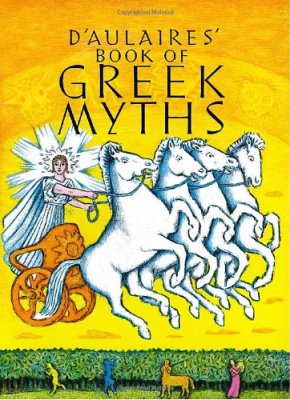
The only other book I truly remember loving and reading was D’Aulaire’s Book of Greek Myths (which I adored so much I stole from the library). I think I loved the art work as much as I did learning about the Greek gods and goddesses.
But I didn’t turn into a big reader until I moved away from familiarity at around 13 years old. After a childhood of playing outdoors, being forced inside created a new space to explore reading, writing and a different take on imaginative play. I read a lot of ‘age appropriate’ books, high school dramas, mysteries, romances, historical and fantasy novels. Whenever I walked into Waldenbooks, I made a beeline for the YA or Young Adult section. After a while I started to look around and explore other genres and even adult books.
My best friend gave me a huge book on poetry when I was in high school. I was surprised and looked at her.
“Because you love poetry,” she explained.
I hadn’t realized until that moment how much I gushed over the poems we were learning in English class. It’s funny how unaware we can be of what we say and how we behave.
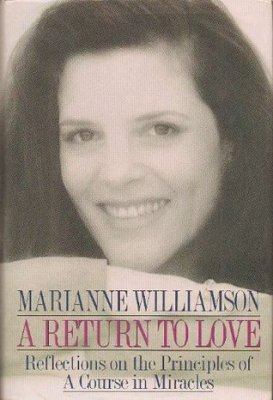
In college though, a book found me and changed me, it was Marianne Williamson’s A Return to Love. My friend Sara introduced the book to me and our friend Kara. We were going on a road trip from Durango, Colorado to her parents’ home in Tustin, California, and she had brought the book along on audiotape.
“So, we’ll listen to this and when you guys want to, just pause it. Whenever you feel like you want to say something or whatever or add to it, just stop the tape, okay?”
I was excited. In Hawaii, where I grew up, we didn’t have road trips. Not really. It takes about 2 hours to drive around the island. The last road trip I took was from Barstow, California to Des Moines, Iowa when I was 14. It had been awhile.
That road trip turned out to be a therapy session and has forever changed the way I think about road trips. Armed with cigarettes, full tanks of gas and girl-power, we listened to Marianne talking about her journey towards finding meaning, forgiveness and spirituality. We laughed and cried and paused the tape whenever we wanted to share something that resonated with us or ask a question.
Well, to be honest, it was mostly Sara and I sharing our wounds. Kara sat silent in the backseat, crying with us. When we needed a break from the heaviness, we’d smoke a joint and popped in some Enya or classic rock. The wind blew our cares away as we melted with the desert landscape. I loved the openness, the endless skies, the isolation, all of it. I’m a West Coast gal through and through.
When we returned home, I bought A Return to Love and read it until I felt like I had memorized it. The book opened up the “Self Improvement” or “Self Help” genre for me and I began to read her other books and similar ones, too. College not only transformed me because I was living in a radically different environment than home, but because I started down this road of self-reflection and self-awareness.
I went through a phase (my 20s and half of my 30s) where I was addicted to these kinds of books. They gave me hope for humanity, that there was a better way and that we are in control of our lives. But most importantly, they taught me to forgive. I had a lot of forgiving to do back then and I’m glad I did the work because now I feel relatively free from past mistakes, problems, people who hurt me and all that nasty garbage we carry around on our backs and in our brains.
Of course, this doesn’t mean life stopped throwing challenges at me. Ha! Hardly.
During my Waldorf teaching years, I was in the worst job of my life, the target of mean gossip, and had a lot of growing up and a lot of letting go to do. But first I struggled and fought with my situation, which was the worst thing I could have done, but that’s what we’re programed to do. This was coupled (pun intended) with the fact that I was in the worst relationship – a man who I referred to as Mr. Angry in my missing teacher memoir.
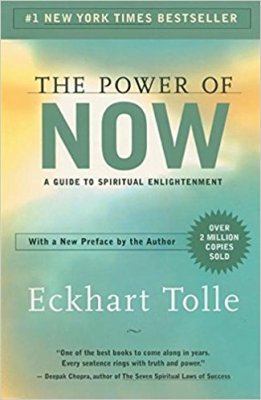
Despite living a rather isolated life due to the shame I felt about what was happening at work and at home, my friend Gina got through to me and recommended The Power of Now by Ekhart Tolle. I bought the audiobook and when I was alone I’d listen to it and then listen to it again because I really needed it. I needed help. Since the book is basically about ‘being present’ not focusing on the future or past, it taught me how to survive those last few months where I was at the school and waiting for Mr. Angry and I to finally go our separate ways.
Then, when I was hit with another doozy, another book came to the rescue. Mr. Angry and I were fighting right up to the last minute of our separation at PDX airport. Unfortunately, we were on the same flight even though he was going to Maui and I, Oahu. But even worse, he asked check-in if we could be seated together. I looked at him as if he was truly mad, although I was too ashamed to tell the woman, “No! Hell, no, please no.”
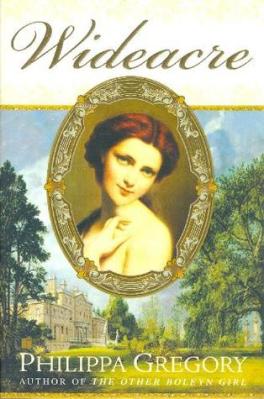
We continued to fight until we were seated on the plane. Only then did he shut his yap, and I pulled out my new book Wideacre, a historical novel by Philippa Gregory. If you are unaware, flying from Portland, Oregon to Hawaii is a long flight, about 6 hours. And it’s extremely difficult to ‘relax and enjoy the flight’ even when you’re not sitting next to your worst relationship. Yet, this 600+ tome of really weird-craziness had my attention all the way through. It was delicious and shocking and helped me to pretty much ignore Mr. Asshole the entire way, which, of course, just pissed him off even more.
The next book to help me was Malcolm Gladwell’s Outliers. After I had written most of the missing teacher, I was stuck because I hadn’t figured out why things happened the way that they did. Folks who know the story have thanked me for not “pulling out the race card”, but they needn’t have done so because I wasn’t fired due to racism. It was much more subtle. So, I tried to track down clues (for years, actually) as to why things didn’t gel between me and the faculty.
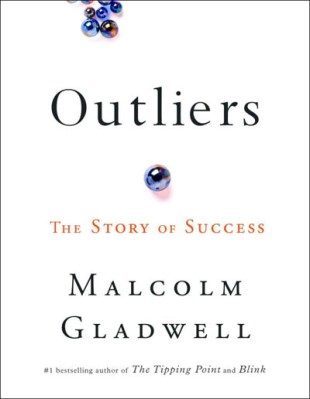
But one fine day, as they say, I was driving with a friend from Alabama to Tennessee and listening to Gladwell’s Outliers: the story of success when I finally found my answer. The problems at the school weren’t due to race, but to the differences in economics and how poor versus rich children are raised. I come from a working class/uneducated family, but I was working at a school of primarily privileged children and well-to-do parents.
I realize on the surface this doesn’t sound like this would be a problem, but it surprisingly caused a lot of misunderstandings. I equate it to stepping into another culture. You don’t realize what the problem is because culture is often invisible, how we behave, think and treat others and what our expectations are often rooted in our worldview and upbringing.
But when Gladwell started talking about the economic differences between Christopher Langan and J. Robert Oppenheimer, I sat up in the passenger seat of the car. I knew he was about to say something important, something that had eluded me for so long. The examples of how Langan dealt with setbacks reminded me of how my mom handled problems by giving up and not questioning authority. How the rich, on the other hand, challenged all people, asked questions and encouraged their children to do so which was not how I was raised. And why I was often confused by how much my commitment and authority as a teacher was ignored and brushed aside for what the children said and felt instead.
I told my friend that I had found my answers. I stopped the CD and started babbling excitedly about how I was raised, how the children of the school were raised and what a mess the whole situation created. It was my epiphany and I was so elated over cracking the case of my worst job, my worst teaching experience and my biggest perceived failure.
What about you? Has a good book changed you?






 Life, the Universe, and Lani
Leave a reply to balroop2013 Cancel reply