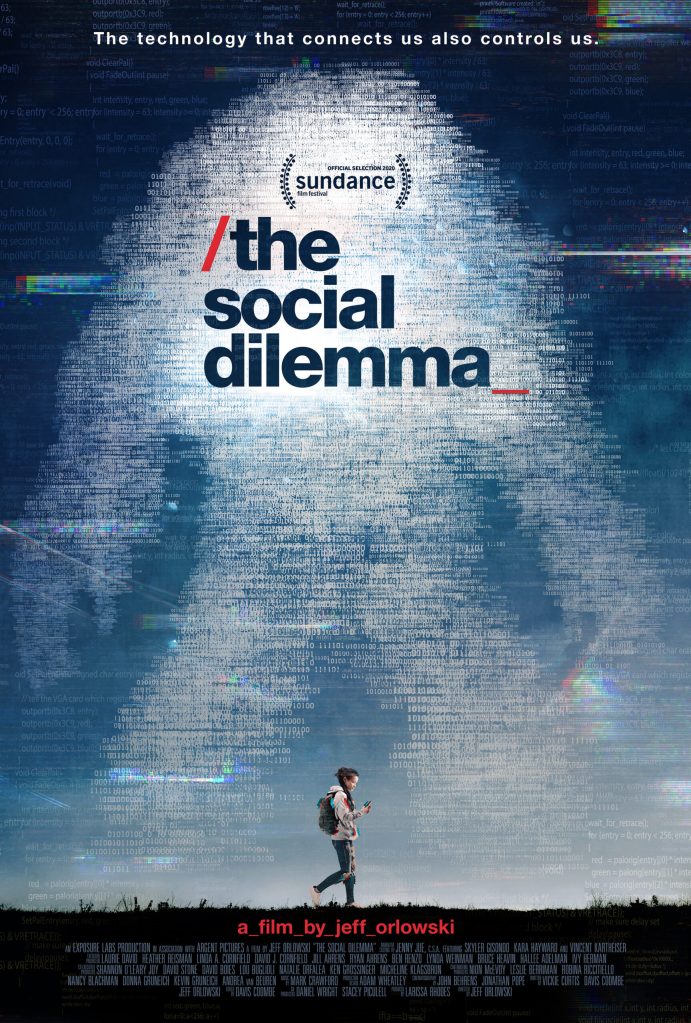
The Social Dilemma was not what I expected. Therefore, I put off watching it because I thought I knew what it was going to be about – how social media harvests and controls our populations. It is, however, much more.
How do you wake up from the Matrix when you don’t know you’re in the Matrix? – Tristan Harris, Google, Former Design Ethicist
It’s everyday and yet extraordinarily talented folks who work (or have worked) in Big Tech sharing just how far the rabbit hole goes. It’s also accompanied by a fictional story of a family, mainly the teens and how they use social media, and how it makes them feel. It’s a must-watch Netflix documentary.

Since I work with teens + young adults and grew up before all of this, I’ve read, watched, and written about about social media. I felt confident that I understood the ‘slot machine’ psychology = dopamine reward business model of Facebook and Instagram. But I believed that by knowing I was being manipulated, I was somewhat immune to its persuasive powers.
After all, if you know you’re being scammed on the cost of something, is it ‘okay’ because you’re aware of it? Or am I fooling myself into thinking that if I double-bag the kimchi it won’t stink up the fridge? In other words, is an awareness of a problem enough to counteract it? [In the case of the kimchi, the answer is no. I’ve got an open bag of baking soda in there too, damn it.]
What I didn’t know was if you Google ‘climate change is…’, for example, the auto-fill form will give you different answers depending on where you live in the world. Jaron Lanier gave the example of what if Wikipedia did this? The news already gives us different definitions depending on whether you are left or right leaning, but I didn’t know Internet searches did this as well.
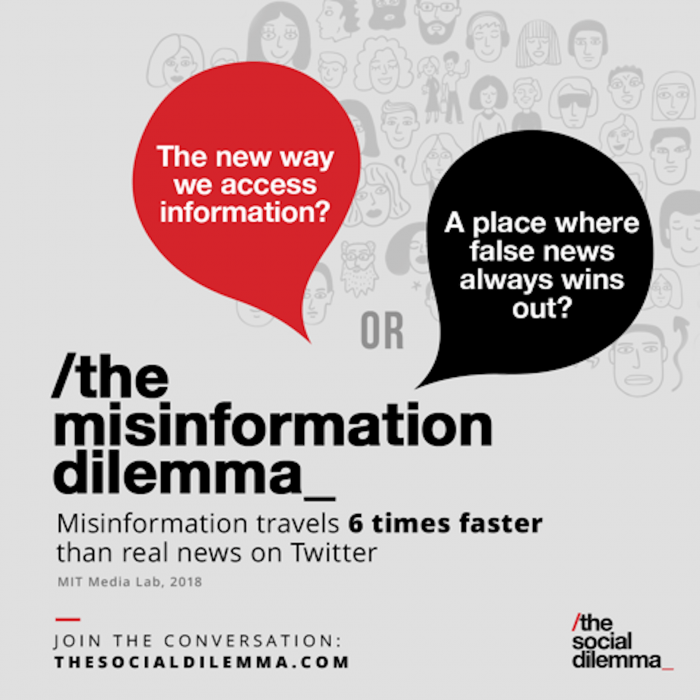
We begin to understand why democratic nations like the US and the UK are more politically polarized than ever before. We often hear and think ‘How can these people believe that?’ and now we know that “confirmation echo bias chambers” aren’t simply responses to who we choose to be friends with on FB, it’s AI catering information based on region, likes, dislikes, and god-knows what else data they have collected on us.
We’ve created a system that biases towards false information. Not because we want to, but because false information makes the companies more money than the truth. The truth is boring. – Sandy Parakilas, Facebook, Former Operations Manager
We no longer disagree, we take sides. We dehumanize people we’ve never met or pretend to know. And this has become normal. I think it’s time to put down our weapons and realize we’ve become the weapons and stop underestimating the pull and power of the information we consume everyday.
I’m grateful that I watched this before the US Elections. It’s been a medicinal balm, that wider perspective which is allowing me to use my brain instead of my emotions. [No small feat!] It’s also made me pause, as in, what makes me think I’m not being hacked? Why do I believe I’m out of the Matrix?
For me one of the biggest issues we face as individuals is not that we aren’t aware of Big Tech’s censorship, influence, and leading hand, it’s that we are in denial that we somehow don’t fall prey to the reprogramming.
The way to think about it is as 2.5 billion Truman Shows. Each person has their own reality with their own facts. Over time you have the false sense that everyone agrees with you because everyone in your news feed sounds just like you. Once you’re in that state, it turns out you’re easily manipulated. – Roger McNamee, Early investor venture capitalist in Facebook
When we were making the like button, our entire motivation was ‘can we spread positivity and love in the world?’ The idea that fast forward to today and teens would be getting depressed when they don’t have enough likes or it could be leading to political polarisation was nowhere on our radar. – Justin Rosenstein, former engineer at Facebook and Google, co-founder of Asana
Ironically, we are fast losing our individual voices as we have become mouthpieces to the latest social trends. And since it’s harder to know the truth, we’ve simplified our worldview in an effort to contain and understand the vast wealth of information we are overwhelmed by.
The Social Dilemma is not just about privacy issues, how Big Data is crushing our children, but about how our attention is being diverted and invested for the greater division of humankind – for profit. Watch until the end, and take back control of your time and your mind.
🖖 Film Fridays is hosted by the good people Sarah and Darren. Just hashtag your post to be part of this fun club.
Have you seen The Social Dilemma?







 Life, the Universe, and Lani
Leave a reply to Happy Panda Cancel reply