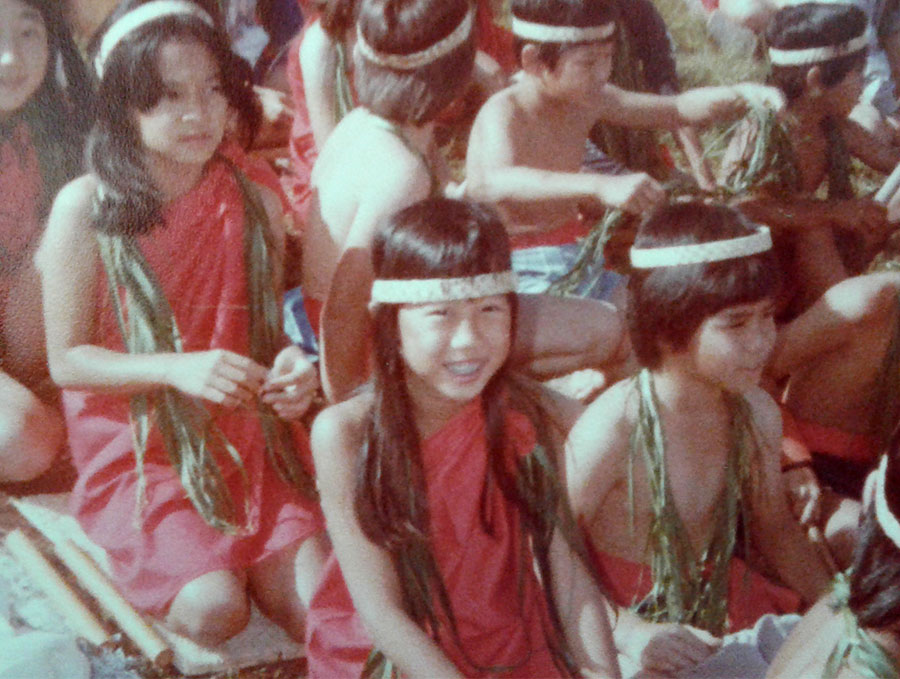
Sometimes I feel like an anomaly. I’m a 45 year old American Thai-Chinese woman who was born in Hawaii, who has lived on three continents, and who was raised by a Thai immigrant mother and a working class white male. I can’t squeeze into an “ism”. My dress size is small in America, but extra-large in Asia. I’m too American in Asia and not Asian enough in America.
At this point in my life being Asian American means having to live up to expectations from family and society. I’m required to be something else (super Asian), something more (super Asian), and something that I’m not (super Asian). I have to be what others want and expect of me, and when I fail to speak Thai fluently in Thailand or do what my mother wants in America, I’m a confusing disappointing mess.
My experiences don’t pigeonhole me neatly into a category either. I’m an Asian American who has been living in SE Asia for roughly eight years. I’ve been an archaeologist and a Waldorf teacher. I learned to cook from a cookbook. And I say this because Americans usually want to know, “Can you cook Thai food?” Asians in Asia, on the other hand, speak directly to me regardless if a non-Asian person is there speaking better Thai or Chinese. Often they will tolerate hear the white person, but reply to me.
But that’s okay. I don’t belong here or there. I’d rather be a “glitch in the matrix” than part of the regularly scheduled programming. I’m the red pill in a blue pill world. What I’ve learned is being different is part of the Asian American journey. I’m the participant and the outsider. I’m forever an anthropologist. I hold the perfect passport for global studies. I’m not black or white. I’m in between. And like a chameleon, I can usually blend in wherever I am.
I know what it’s like to be in the minority and among the majority. I have been on all three sides of the fence. When I lived in the US, I lived in Asian American majority places like Hawaii and certain parts of California. I also lived in AA minority places like Alabama and other parts of California.
I know what it’s like to have no friends because I was different (Barstow, California in the 6th and 9th grade). I know what it’s like to be part of a quirky outsiders group (aka theatre) in Mililani, Hawaii (11th and 12th grade). I’ve been teased in Hawaii, Oregon, and California. And I know what it’s like to be hit and to hit back. I can remember those shocking moments of racist behavior towards me, and thankfully the reason why I remember them is because they were not part of my normal everyday life.
We have a tendency to focus and remember the bad stuff like if we have a crappy day. We forget the free coffee a coworker brought us or the smile that the kid gave us when we were in traffic. But we remember the wrongdoings, transgressions, and hold on to criticism like lifejackets. We get paranoid about what we think others say about us. Often, we assume the worst. Sometimes we live out lifetimes of misunderstandings.
In high school, I used to be super jealous of my best friend who’s half-Japanese and half-British. All the guys liked her. I compared my looks to her and felt ugly. But one day, years after those insecure times, we had an important conversation.
“You know, I used to be jealous of you.”
“What? Why?” She asked.
“Because you’re so pretty!” and then I proceeded to list off all the guys that liked her.
She laughed. “I certainly didn’t feel pretty. I felt fat.”
“Fat!?”
Then she said, “Well, I used to be jealous of you too.”
“Why on earth would you be jealous of me?”
“Because you’re funny. You make everyone laugh. Everyone wants to be your friend.”
That was a big thing for me to hear from her so I didn’t speak for a few moments. I also knew she wasn’t BS-ing me either because she was shy.
I get it though. We like to throw pity-parties for ourselves and stuff our “woe is me” hole with Death By Chocolate ice cream cake. I’m very good at feeling sorry for myself. Actually, I think most Americans are and it’s because, for the majority of us, we grew up lucky.
If you’re a first-generation American, chances are good you’ve heard the story from grandma or mom about the struggles they endured to reach American soil or the hardship they lived through back in their home country, or both. And as an American Asian expat in Asia, I can say with confidence that there is a world of difference in human rights, equal rights, and heck, even animal rights over here. Grandma was not exaggerating.
For example, you can’t speak out against the government in most Asian countries. You simply don’t do it. If you do, you end up exiled, in jail, or conveniently disappear. And if you don’t believe me or if you think I’m embellishing the truth, I invite you to read Asian history, current news or start a conversation with expats in Asia. Most of the Chinese side of my family fled during the Cultural Revolution, which basically makes the bloodshed of Game of Thrones small-scale in comparison.
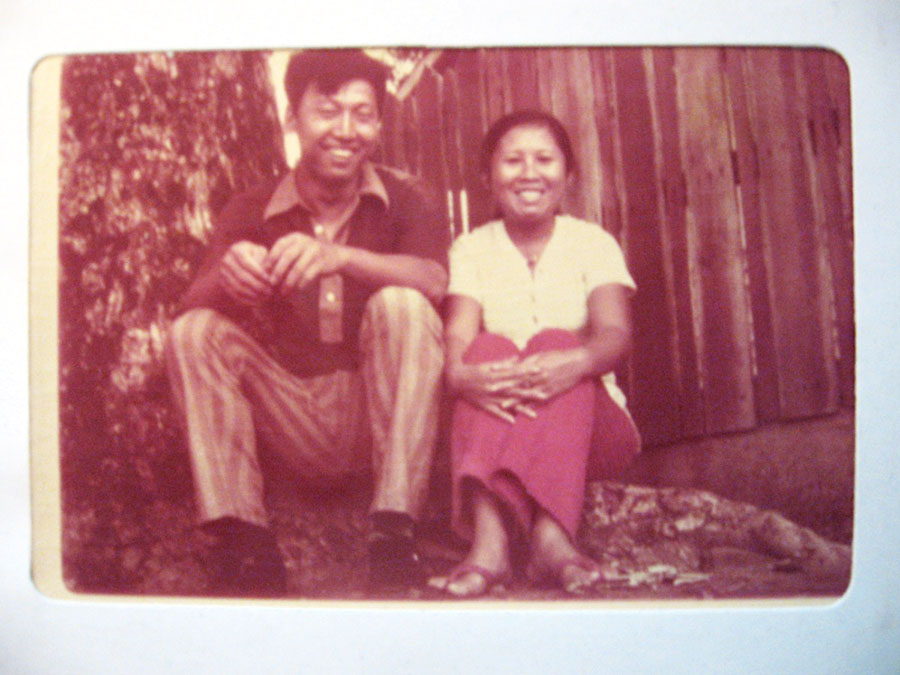
Now, this isn’t to say AAs aren’t subjected to some horrible race crimes. They are. Unfortunately, there doesn’t appear to be reliable statistics on this. Plus, I’m willing to wager Asian Americans are less likely to report crime, which doesn’t help bring awareness to the problem either. So I’m not saying it’s a Sunday afternoon picnic for Asian Americans. Hardly. I’m just saying step back, widen the telescope, there’s a timeline to consider.
Some Chinese and Korean adoptees are here because they were not wanted. Being born a girl was not desirable in China, as can now be seen by the extreme shortage of women due to female infanticide. It is estimated that 30 to 60 MILLION females have gone “missing” since 1982.
In Korea, there was a question of “purity” – half-white babies as the result of the Korean War were considered unclean due to race. There was also the issue of poverty and the cultural stigma of being a single mother.
Typically, adopting a child in Asian countries is not considered normal unless it is within your own family: there are too many taboos and religious ideas surrounding the idea of taking in another kid. But in the West, adoption is considered noble and big-hearted.
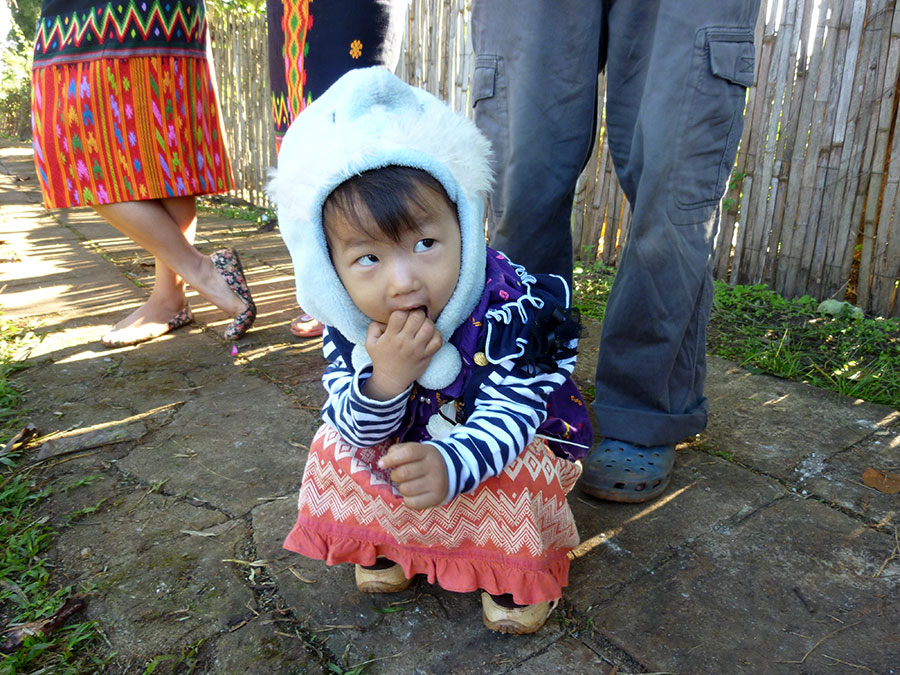
I think this is because I have lived in Asia for so long. I’ve seen another side to the world, literally and figuratively, and I’m a changed person as a result.
It has been particularly rewarding to be an Asian American teaching English abroad. The face of American English is seen as a white, black or Latino, but not an Asian one. I am never what my students think I am. Never. I’m Chinese, Japanese, Filipino, Malay, Korean, but not ever American until I tell them otherwise.

Life has strangely enough prepared me for “identity flexibility training”. I’m Hawaiian because of my first name. I’m married because of my last. I’m Japanese because of the way that I dress. I’m Native American with my deep tan in Southwest Colorado. In other words, I’m used to being perceived as someone else. I should have been cast as an assassin in the latest Hollywood spy blockbuster. John Rain’s got nothing on me, baby.
My mom finds it crazy that I live in her birth country. She calls Thailand dangerous. She doesn’t understand why I’d rather live here than in America. I’m a college graduate and possibly the first in her family. She cried when I graduated high school, and she cried again when I graduated college. Nevertheless, she does not say, “I’m proud of you”. My father’s mother would say it, and hand those words out like candy as a doting grandmother should. But those words are not in my mother’s vocabulary. And why should they be? She isn’t proud.
Our values don’t align. I’m too American and she’s too Thai. I should be living near her. I should have been an airline stewardess or a bank teller – an air hostess because it’s considered glamorous to Thais, and a bank teller because I would be counting money all day in air-conditioning. I should have had at least one child by now. I should have married a wealthy and successful Asian American man from a good family. I should have an expensive car and a big house.
I used to watch Oprah interview families; you know the ones, where the child did something brilliant, but different, and the parents were always supportive. Maybe the child took to acting, and the parents would say, “We told her she could do it.” You would see the pride shining in their eyes. And I knew that if I ever was in their place, my mom would pretend she knew what was happening, and act like she had always been my biggest cheerleader.

She would put on such a good face, you’d never suspect anything contrary from a 4’10 sweet old lady. You’d never know that she used to beat us because that’s what her father did to her. You’d never realize that she could hurl such hurtful words like “you’re good for nothing”. But she is also a generous person. She’s quite funny and loves to laugh. She’s a gifted cook and gardener, and an easy-going travel companion.
Yes, we Asian Americans, we’ve got stories. That’s the mistake that Hollywood makes. We share common ground with the rest of Americans. We’re not just Kung-fu fighters, geishas, and Math geeks. Maybe we are that, too, but underneath our brown or yellow or pale skin, there’s a yarn that spins.
I remember giving a ride home to a fellow writers’ group member. We were a small group and he was the only minority other than me. He wrote dark poetry, but in a unique way. We were discussing his work when we started talking about how our mothers used to beat us.
“Oh, the belt. My mother never used the belt.”
“Oh, I know. Me, too. So overrated.”
“My mom would use a wire hanger to hit us.”
“Ohh, man.”
“Yeah, that shit hurt. It leaves a serious mark too.”
“That’s nothing compared to what my mom used.”
“What? What did she use?”
“She used her high heel shoes.”
“Oh, fuck.”
I was laughing so hard I was crying. He was laughing pretty hard too. I suppose to an outsider it looked like we were crazy, but to us, we were bonding, we were commiserating. And I was transported back to all those times I watched standup comedians like Chris Rock and Bernie Mac talk about their painful family situations. Growing up on standup comedies was my form of therapy. I laughed along feeling understood particularly over such shameful subjects, experiences I felt alone in. I started memorizing lines that I found funny. And I think I started to intuitively gain a grasp of the power of storytelling.
Perhaps this is one of the reasons why I ask so many questions. I’m a wannabe reporter sleuthing out a good story. I usually learn quickly how couples have met. I ask Asian American expats about their experiences abroad. I listen to people talk about their childhoods. Partly because I’m a curious person, but I genuinely want to connect with people too.
I have a Cambodian American friend that is not much older than me who escaped the Khmer Rouge. One day he told me his story. I wanted to know how he managed to get out, especially after his parents originally turned down the US Embassy’s offer to give his family a ticket to America because his father didn’t think the situation in Cambodia was going to ever get that bad.
He explained the separate camps between male and female, and how his mother and sister were not with him and his dad. He told me that they were in labor camps, and that it was his father who figured out a way to get them to the Thai border. Other families joined them. His mother’s family didn’t make it out. They walked and walked and walked to freedom, very possibly through land mines too. I don’t remember, but I remember he said this:
“I know what rotting human flesh smells like.”
We sat side by side. He didn’t look at me and I didn’t look at him. I just listened.
Even though our stories are different, they overlap as well. After all, here we were two Asian Americans talking in Cambodia. His story and mine breathe together shoulder to shoulder. We help weave a tapestry of Asian American experiences from FOB “fresh off the boat” immigrants to children adopted into white families, and everyone else in between.
To an outsider, we are the same, and maybe we are in our collective consciousness. But we are also individuals. This is one of the struggles of being Asian + American. We are the result of a complex relationship between two very different ways of life, ways of being, and ways of thinking. Although, it would be a mistake to feel our stories compete with one another, as I believe they continue a narrative that celebrates our diverse history.
I am Asian American. And while I may or may not live up to the expectations of others, I know that the ultimate one that matters is mine.
By the way, do these pants make me look fat?



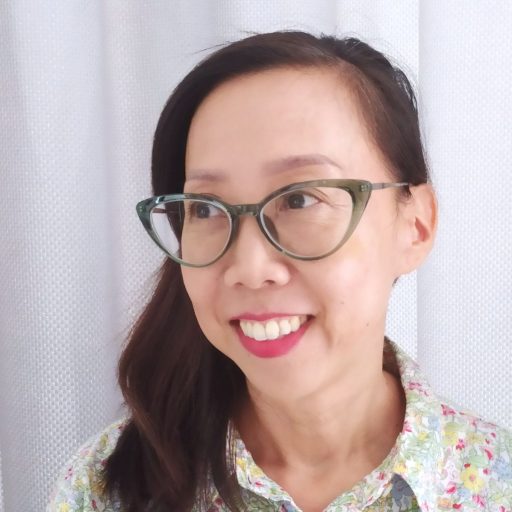






 Life, the Universe, and Lani
Leave a reply to vitashi Cancel reply